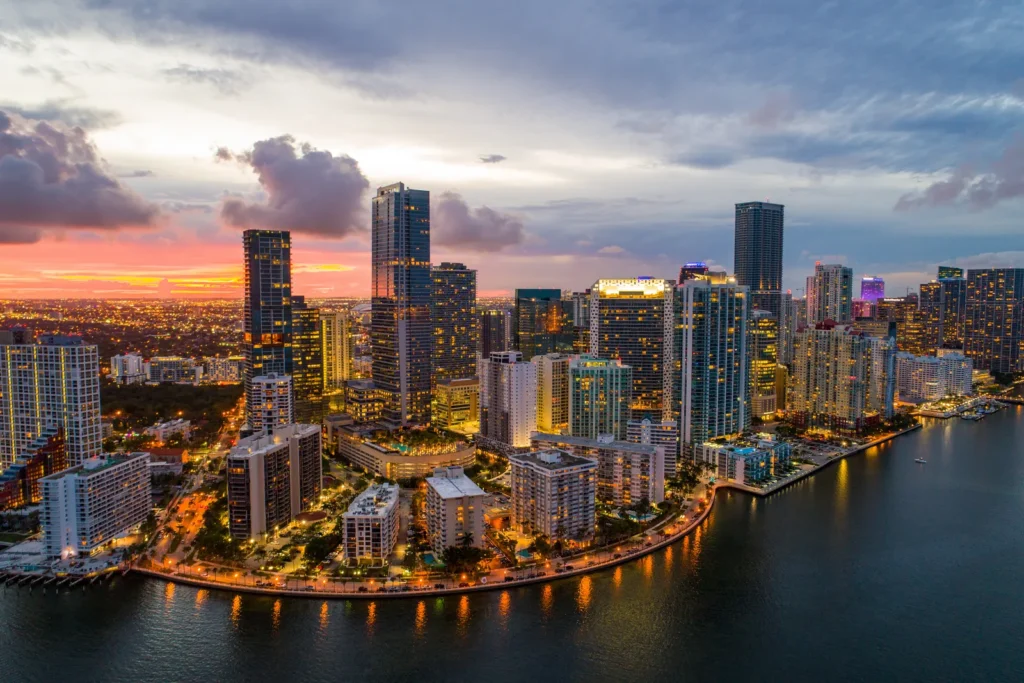
Homestead is a Miami-Dade County city of about 85,800 residents where flood-zone rules, hurricane exposure and a city-owned electric utility shape most home purchases.
This guide covers the questions a buyer or seller in Homestead should settle first: flood zones, storm surge, permits and zoning, utilities, property tax exemptions, historic downtown and getting around. Each rule is linked to the city, county, state or federal page that publishes it.
What kind of place is Homestead, Florida?
Homestead is an incorporated city in southern Miami-Dade County, with Biscayne National Park to the east and Everglades National Park to the west. The city’s own About our City page says Miami is thirty miles to the north, Everglades National Park is ten miles to the west, and the Florida Keys begin just to the south.
| Fact | Detail |
|---|---|
| County | Miami-Dade County |
| Town incorporated / became a city | 1913 / 1923 (city history timeline) |
| Population | 85,796, Census Bureau estimate for July 1, 2024 (Census population estimates) |
| Land area | 15.084 square miles (2024 Census Gazetteer) |
| Governing body | Seven elected officials: a mayor, a vice mayor and five councilmembers, on staggered four-year terms (Mayor and Council page) |
| School district | Miami-Dade County Public Schools |
| Electric utility | HPS Energy, run by the city |
The city’s timeline records that the town was incorporated in 1913 with 121 residents and 28 registered voters, that Hurricane Andrew struck it directly in 1992, and that it held its centennial in 2013.
How do flood zones and flood rules work in Homestead?
Flood zones in Homestead are shown on FEMA’s Flood Insurance Rate Maps, and the city requires new or substantially improved buildings to sit one foot above the Base Flood Elevation. The city’s Local Flood Hazard Information page sets out the rules below.
| Item | What the city says |
|---|---|
| Special Flood Hazard Area | Subject to the one percent annual chance flood |
| Minimum floor height | New and substantially improved buildings: finished floor one foot above Base Flood Elevation |
| Substantial improvement | Work costing 50% or more of the building’s market value before the work begins |
| Flood zone letter | The city issues a Flood Zone Determination letter at no cost |
| Elevation certificate | Development Services may hold a copy for a property |
| Flood insurance rating | Homestead takes part in the Community Rating System; the page cites a 15% discount for Class 7 communities |
The city’s Flood Insurance page adds two cautions. A Zone X designation does not guarantee a property will never flood, and it says the map revisions were still preliminary when the page was written, so confirm the current effective map before relying on a zone.
When LPE Realty reviews a Homestead purchase, the first flood documents we ask for are the flood zone determination and any elevation certificate on file, because the 50% rule can limit how much a future owner can renovate without raising the building.
The city page also states that homeowner’s policies do not cover flood damage and that a new flood policy has a standard 30-day waiting period. Florida also requires the seller to give a flood disclosure at or before the time the sales contract is signed. Under Section 689.302, Florida Statutes, the form asks whether flooding has damaged the property during the seller’s ownership, whether the seller filed a flood insurance claim, and whether the seller received flood assistance. See also our guide to Florida seller disclosure requirements.
What does hurricane exposure mean for a Homestead purchase?
Hurricane Andrew struck Homestead directly in 1992, so storm planning is part of owning here, and Miami-Dade County orders evacuations by zone using its storm surge planning zones. The county’s Storm Surge Planning Zones page defines five zones as areas that could see surge of about 1.5 feet or more.
| Zone | Storm strength that puts it at risk |
|---|---|
| A | Category 1 and up |
| B | Category 2 or stronger |
| C | Category 3 or stronger |
| D | Category 4 or stronger |
| E | Category 5 only |
The county’s evacuation page explains that orders go out by zone or partial zone, and that the county mayor bases them on the storm’s track and projected surge. Use the county’s zone finder with the exact address you are considering. The city’s Emergency Management page offers a Ready Homestead alert sign-up and a hurricane preparedness guide. Also read our guides to home insurance when buying in Florida and windstorm and flood insurance due diligence.
How do permits and zoning work in Homestead?
Homestead handles permits and zoning through its Development Services Department, and the city accepts planning, business license and permit submittals electronically only. The department’s Development Services page lists building, business services, planning and zoning, and economic development divisions, and says the building division enforces the Florida Building Code.
- A permit application must include the 13-digit property folio number, and owner and qualifier signatures must be notarized.
- The city’s Building Permits page says a complete plan review cycle typically takes 21 days or less, depending on project size.
- Miami-Dade fire, water and sewer, and environmental (DERM) reviews may also be required.
- An owner doing the work personally must provide proof of ownership and sign an owner-builder affidavit.
For zoning, the city’s interactive zoning and land use map page offers parcel-specific zoning data, and its Zoning and Maps page links the Official Zoning Map, Future Land Use Map, Comprehensive Plan and the Northwest Master Plan. A sensible step before an offer on a home you plan to change is to check the zoning district and the permit history for the work already done. LPE Realty looks at both before a buyer commits to renovation plans.
Why does Homestead’s city-owned electric utility matter to a buyer?
Homestead runs its own electric utility, HPS Energy, which the city says has served the community since 1916 and uses natural gas as the primary fuel for all ten of its generating units. The city’s HPS Energy page describes it as generating, distributing and selling electricity, and links a service area map plus rebate and net metering programs.
That makes the electric account a city account for homes inside the service area. When LPE Realty walks a Homestead buyer through closing paperwork, we confirm which utility serves the address, set up the transfer of service early, and ask about rebates before the buyer plans solar or efficiency work.
What property tax exemptions apply to a Homestead home?
A Homestead buyer who makes the home a permanent residence can apply for the Florida homestead exemption through the Miami-Dade Property Appraiser, and applications must be submitted by March 1. The Property Appraiser’s homestead exemption page requires legal or equitable title and permanent residence on the property as of January 1, and it lists the school board exemption at $25,000 of assessed value.
The Save Our Homes page explains that the benefit limits the annual rise in assessed value to 3% or the change in the Consumer Price Index, whichever is lower. Portability lets an owner carry those savings to a new homesteaded property. The Property Appraiser’s home page links a Property Tax Estimator and a TRIM notice tool, and its taxing authorities page links the current adopted millage rate table. Our statewide guides cover the homestead exemption and Save Our Homes cap in more depth.
What is there to do around Homestead’s homes, and how do residents get around?
Homestead’s setting between two national parks, a historic downtown and a free city trolley defines daily life as much as the houses do. The National Park Service says Biscayne National Park is 95% water, and Everglades National Park protects 1.5 million acres of wetland, forest and marine habitat.
- Historic downtown: The city’s Historic Preservation page says Historic Downtown Homestead joined the National Register of Historic Places in 2007, covering about 12 acres across 11 city blocks. It does not describe exterior-change rules, so ask the city’s Community Redevelopment Agency before planning work on a designated property.
- Parks: The city operates its parks year-round through Parks and Recreation, and describes the Homestead Sports Complex as a 130-acre facility.
- Transit: The Homestead Trolley is free and runs three routes, weekdays 6 am to 6 pm and weekends 10 am to 2 pm. After a Trolley Efficiency Study, the city published planned routes designed to connect with Miami-Dade County Rapid Transit stations and Metrobus lines. The city has also run a free weekend trolley to the national parks.
Frequently asked questions
Is Homestead in Miami-Dade County or Broward County?
Homestead is in Miami-Dade County, in the southern part of the county near Biscayne National Park and Everglades National Park.
How far is Homestead from Miami?
The city’s own page says Miami is thirty miles north of Homestead.
Do I need flood insurance in Homestead?
The city says homeowner’s policies do not cover flood damage and that a new flood policy has a standard 30-day waiting period, so ask for the flood zone determination early in the purchase.
When is the homestead exemption deadline for Homestead homeowners?
Applications and documents must reach the Miami-Dade Property Appraiser by March 1, and you must hold title and live in the home as of January 1 of that year.
Who provides electricity in Homestead?
The city-run utility HPS Energy serves Homestead’s service area, and the city publishes a service area map, so confirm coverage for the specific address.
How do I find the assigned schools for a Homestead address?
Homestead is served by Miami-Dade County Public Schools, so use the district’s own attendance boundary lookup through its website, dadeschools.net, and verify the result before relying on it.
LPE Realty LLC is a licensed Florida real estate brokerage. If you are weighing a Homestead move, you can buy with LPE Realty or sell with LPE Realty.