St. Lucie County, Florida, is a Treasure Coast county with two cities and the municipality of St. Lucie Village, where flood rules, Indian River Lagoon septic requirements, and which local government issues your permits shape most home purchases.
This guide covers how the county is organized, how property taxes and homestead work, what to check for flood and hurricane exposure, and how to compare its places. Rules are linked to official sources so you can confirm current details yourself.
How is St. Lucie County organized, and why does it matter when buying?
St. Lucie County has two incorporated cities, Fort Pierce (the county seat) and Port St. Lucie (the largest city), plus the Village of St. Lucie Village, according to the county’s facts and statistics page, which also says the county was incorporated in 1905 and lists 572 square miles of land and 116 square miles of water.
Who permits and zones a property depends on where it sits. The county’s permitting and zoning page says its Building and Code Regulation Division serves the unincorporated area, which it puts at 418 square miles, while Fort Pierce, Port St. Lucie and St. Lucie Village issue permits to their own residents. When LPE Realty reviews a St. Lucie County purchase, one of the first questions we ask is whether the address is inside a city or in the unincorporated county, because that decides which office holds the permit history.
| Key fact | Detail |
|---|---|
| County seat | Fort Pierce |
| Largest city | Port St. Lucie |
| Population | 329,226 (April 1, 2020 Census) |
| Land area | 571.66 square miles (2020) |
| Density | 575.9 people per square mile (2020) |
| School district | St. Lucie Public Schools |
The population, land area and density figures come from the Census Bureau QuickFacts table for the county.
How do property taxes and homestead work in St. Lucie County?
Each year the Property Appraiser mails a TRIM notice, which its TRIM notice page describes as an estimate of your property taxes based on proposed millage rates, not a bill. When the bill is paid, Florida law sets an early-payment discount of 4 percent in November, 3 percent in December, 2 percent in January and 1 percent in February, with no discount in March (section 197.162, Florida Statutes).
Your total bill depends on which taxing districts cover the parcel. The Property Appraiser’s taxing authority rates page lists these 2025 city rates, which are only one part of a bill:
| Municipality | 2025 city millage |
|---|---|
| Fort Pierce | 6.9000 |
| Port St. Lucie | 4.6607 |
| St. Lucie Village | 2.0000 |
The same page lists a 2025 County General Fund rate of 4.1985. County, school, water-management and other districts are added on top, so use the Property Appraiser’s tax estimator instead of adding rates by hand.
The homestead filing deadline is March 1. The Property Appraiser’s exemption page says applicants must own and occupy the home as their permanent residence as of January 1, and that applications can be filed online or in person. After the first homestead year, the Save Our Homes limit holds annual assessment growth to 3 percent or the change in the consumer price index, whichever is less, per section 193.155, Florida Statutes. The Property Appraiser’s TRIM page notes that property taxes are subject to change upon change of ownership and that a prior owner’s caps are removed, so a seller’s current tax bill is not a prediction of the buyer’s. Our guide to the homestead exemption and the Save Our Homes cap walks through the details.
What should I know about flood zones and flood insurance in St. Lucie County?
St. Lucie County has taken part in the National Flood Insurance Program since 1981 and participates in the Community Rating System, per its flood protection information page. The same page links an interactive map of FEMA flood zones within the county, and FEMA’s flood data viewers page is the federal route to flood hazard data for a specific address.
When LPE Realty reviews a waterfront or barrier-island purchase in the county, we ask for the flood zone determination and any elevation certificate before the inspection period ends, because the answer drives both the insurance quote and what repairs or additions are allowed later. Our guides on windstorm and flood insurance due diligence and home insurance when buying in Florida cover the buyer’s checklist.
Which hurricane evacuation zone is a St. Lucie County home in?
The fastest way to find out is the state’s Know Your Zone tool, where you enter an address or use your device location, described on the Florida Division of Emergency Management preparedness maps page. The county also publishes an interactive map on its shelter and evacuation page to show whether an evacuation has been ordered for your area.
In a past county advisory for Tropical Storm Nicole, officials said Zones A and B include the barrier island, low-lying areas along the St. Lucie River and the Indian River Lagoon, and people living in manufactured or mobile homes and recreational vehicles (county advisory). The county’s flood page adds that mobile homes, manufactured homes and recreational vehicles must be evacuated county-wide for any hurricane, and its shelter page describes shelters as a refuge of last resort.
What does the Indian River Lagoon mean for septic systems and buying?
Homes on septic systems near the lagoon face changing rules. The state Department of Environmental Protection’s enhanced nutrient-reducing septic page says that, effective January 1, 2024, new septic systems on lots of all sizes in the Indian River Lagoon Protection Program area must be nitrogen-reducing systems, and it sets a July 1, 2030 date for existing systems in that area to connect to sewer or upgrade to a system that achieves at least 65 percent nitrogen reduction. Confirm the current date, and whether a given parcel is inside the program area, with the department.
The county’s North Hutchinson Island septic removal project will replace individual septic systems with central sewer in the four remaining neighborhoods there still served by onsite systems, about 530 tanks, including around 340 directly next to the Indian River Lagoon. Ask in every septic-served purchase whether a sewer connection is planned and who pays for it.
How do I look up assigned schools in St. Lucie County?
The district is St. Lucie Public Schools. Its website links a district boundaries map and a Student Assignment department. Use the district’s own boundary resources and confirm an address with Student Assignment, since attendance zones can change.
What airport serves St. Lucie County?
The county’s airport page describes Treasure Coast International Airport (FPR), formerly St. Lucie County International Airport, as a general aviation airport covering 3,844 acres, with a full-service fixed-base operator and a U.S. Customs and Border Protection office.
How do the places in St. Lucie County compare?
Each place below has its own page. Facts come from the sources linked in each line.
- Port St. Lucie: incorporated April 27, 1961, and about 120 square miles in size according to the city’s About PSL page.
- Fort Pierce: the county seat, incorporated in 1901 and covering about 31 square miles, per the city’s residents page, which traces the city to a military post founded in 1838.
- St. Lucie Village: home to a National Register historic district that includes the site of Fort Capron, from the Third Seminole War (1850-1859), with a period of significance of 1850 to 1928 (National Register nomination).
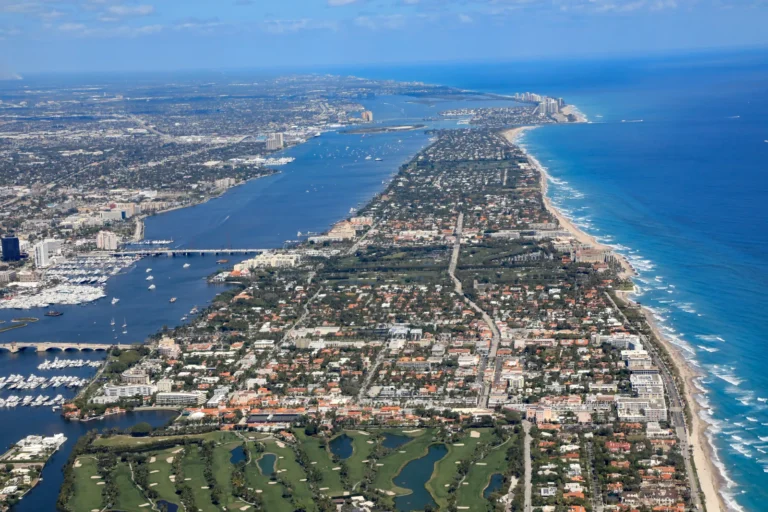
- Hutchinson Island: the barrier island along the county’s ocean shoreline, reached by the South Causeway (Seaway Drive) and the Jensen Beach Causeway per the county’s Blind Creek beach page; the county’s renourishment page describes a federal beach nourishment project along the southern 3.3 miles of the county’s Atlantic shoreline, from Normandy Beach to the Martin County line.
- Lakewood Park: a census-designated place listed under the county’s Fort Pierce census county division in 2010 Census publications and is also the name of a 156-acre county regional park with athletic fields, trails and a pool (county facility page).
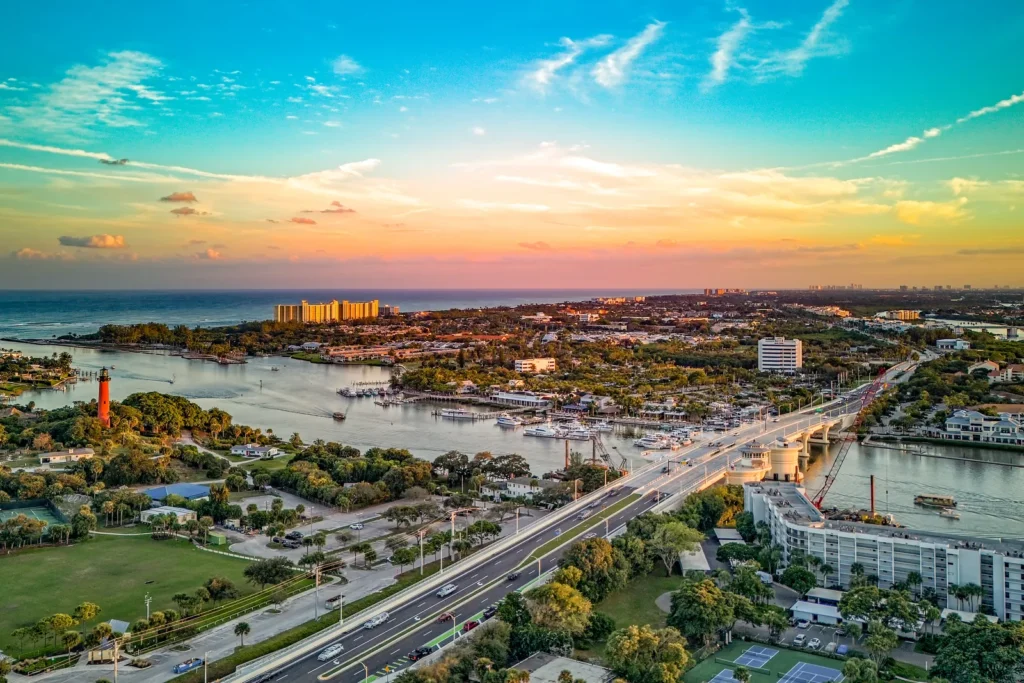
The county also lists preserves. The Donald B. Moore (St. Lucie Village) Heritage Preserve is a roughly 75-acre preserve managed by the Town of St. Lucie Village with the county, with interpretive trails, a disc golf course and an observation tower over the Indian River Lagoon.
Frequently asked questions
When is the homestead deadline in St. Lucie County?
The filing deadline is March 1, and you must own and occupy the home as your permanent residence as of January 1 of that year.
How many cities are in St. Lucie County?
Two cities, Fort Pierce and Port St. Lucie, plus the Village of St. Lucie Village.
How do I find my hurricane evacuation zone?
Use the state’s Know Your Zone tool or the interactive map on the county’s shelter and evacuation page, and follow county emergency management orders.
Who issues building permits in St. Lucie County?
The county handles the unincorporated area. Fort Pierce, Port St. Lucie and St. Lucie Village issue permits inside their own limits.
How do I find the school assigned to an address?
Use St. Lucie Public Schools’ boundary resources and confirm with its Student Assignment department.
Is there a discount for paying property taxes early?
Yes. Florida law sets a 4 percent discount in November, 3 percent in December, 2 percent in January and 1 percent in February, with no discount in March.
LPE Realty LLC is a licensed Florida real estate brokerage. If you are planning a move, start with our guide to buy with LPE Realty or sell with LPE Realty.