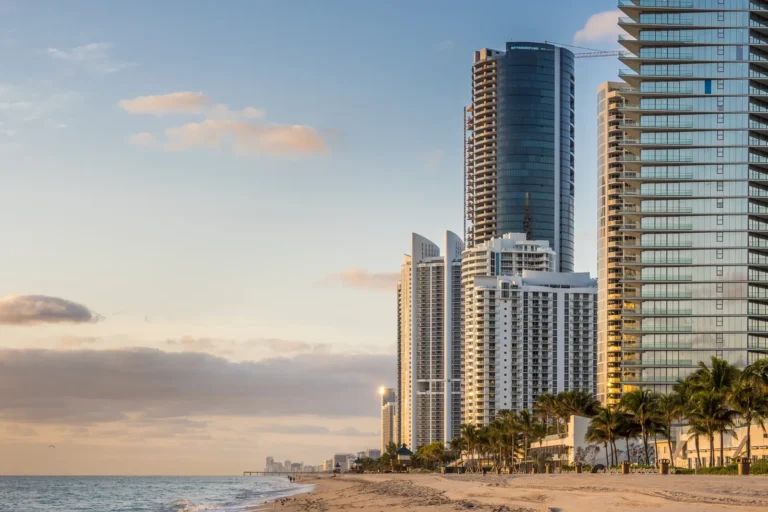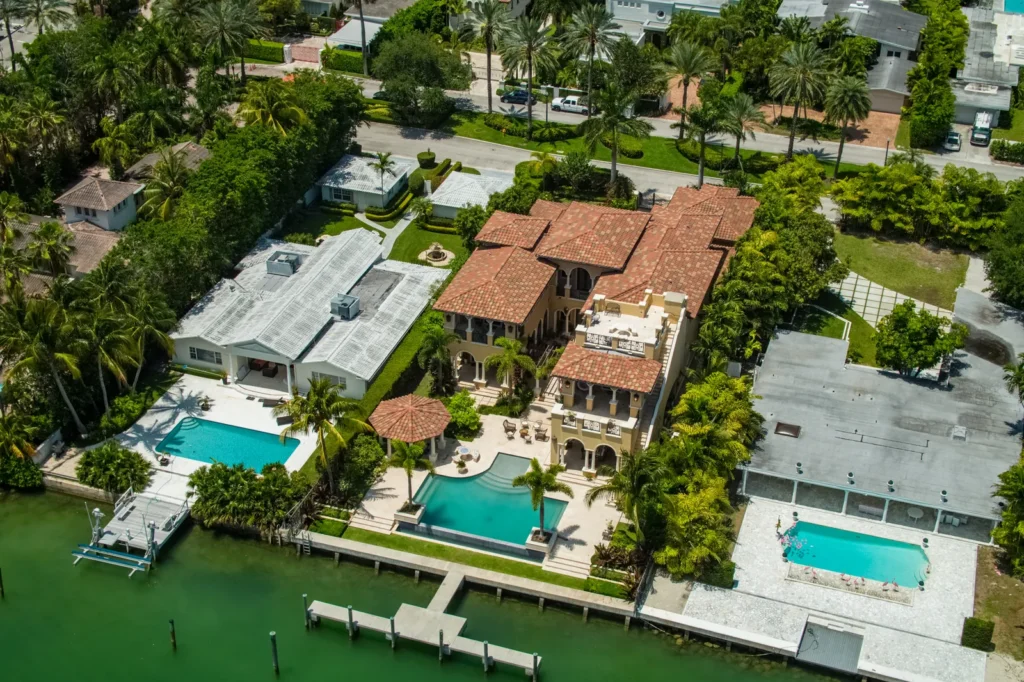
North Miami Beach is a Miami-Dade County city where flood-map status, the zoning along its redevelopment corridors, and the age of the building most shape a home purchase.
This guide covers the city rules, county tax steps and state condo law that apply to buying or selling in North Miami Beach, and each section links to the official source it draws from.
Who sets the rules for a home purchase in North Miami Beach?
The City of North Miami Beach sets most of the rules that touch a purchase, and the county sets the tax side. The city uses a commission-manager system: an elected mayor and six-member city commission set policy, and an appointed city manager runs city operations, according to the city’s Government page. Its zoning and land development code is published in the city’s code of ordinances.
Three city departments matter most to a buyer or seller. The Building Department accepts permit applications, issues building and trade permits, and says its inspectors check new and existing structures against the Florida Building Code. Planning and Zoning publishes the official zoning map, an interactive GIS zoning map, the comprehensive plan and the application checklists. NMB Water is the city’s own water department, so water service and billing run through the city.
When LPE Realty reviews a North Miami Beach purchase, the first documents we pull are the zoning district, the permit history and the flood map status, because those three decide what a buyer can finance, insure and change.
| Key fact | What the official source says |
|---|---|
| County | Miami-Dade County |
| Form of government | Commission-manager: mayor, six-member commission, appointed city manager |
| Permits | City Building Department, with an online permitting portal |
| Water service | NMB Water, a city department |
| Local transit | NMB Line, a free city shuttle, Monday through Saturday |
| Community Redevelopment Agency | Scheduled to sunset on October 11, 2028 |
How does zoning shape what I can do with a North Miami Beach property?
Zoning decides whether a lot can hold only homes or a mix of homes and businesses, so check the district before you plan an addition, a second unit or a business use. The city’s Planning and Zoning page points to the Official Zoning Map and an interactive GIS zoning map for looking up a property by address.
The city rezoned key locations under its mixed-use and form-based zoning program. Its Phase I page says the comprehensive plan and zoning code amendments were adopted in March 2015 and that the districts allow both residential and nonresidential uses. In exchange for added development rights, new projects must provide public benefits such as open space, public access to the waterfront, streetscape improvements and utility undergrounding.
The Phase 2 page lists further study areas. The first two are West Dixie Highway north of 172nd Street, together with B-2 zoned properties east of Biscayne Boulevard on NE 163rd Street, and commercial and some multi-family properties along the NE 167th Street / NMB Boulevard / NE 163rd Street corridor between I-95 and NE 15th Avenue. Two more are marked as future study areas: Jackson North Hospital and the creation of a Medical Innovation District, and the NE 19th Avenue corridor between NE 172nd Street and Miami Gardens Drive. The page posts draft regulations, including draft Canalside (NE 163 St) and International Blvd (NE 167th St) mixed-use district rules, as available for public comment and review, not as adopted zoning, so confirm current status with the city before relying on any of it.
Separately, the Community Redevelopment Agency is a partnership between the city and Miami-Dade County. It offers incentive programs for businesses and residential buildings inside its area and is set to end on October 11, 2028. The agency provides a tool for checking whether a specific property lies inside its boundary.
What should I know about flood zones and king tides in North Miami Beach?
Whether a home sits in a FEMA Special Flood Hazard Area controls whether a lender requires flood insurance, so get the flood zone determination early. The city’s Floodplain Management page explains that the Flood Insurance Rate Map is the official FEMA map of those areas and that the city can give you map information for a property if you provide the address.
- The city keeps elevation certificates for buildings built or substantially improved in a Special Flood Hazard Area, and you can ask the Floodplain Manager about a copy.
- Because the city participates in FEMA’s Community Rating System, federal flood insurance is available for any property in the city.
- On request, the Floodplain Manager and the Public Works Administrator will visit a property at no charge to review flooding and suggest ways to reduce damage.
The city’s King Tide page defines a king tide as the highest predicted high tide of the year at a coastal location and warns that flooding can be much worse when one coincides with heavy rain, strong wind or large waves. It tells residents to avoid driving through flooded areas and to report standing water to Public Works. The city’s Storm Water Utility maintains storm drains, outfalls and public swales, and its page includes questions and answers on the stormwater charge on utility bills, which is a recurring cost to ask about when you review a seller’s bills.
When LPE Realty walks a North Miami Beach buyer through flood risk, we ask for the elevation certificate or the flood map determination before the inspection period ends, so the insurance quote is based on documents instead of assumptions.
What do hurricane evacuation orders mean for a North Miami Beach home?
Miami-Dade County issues evacuation orders by zone or partial zone, so a buyer should find out whether a property falls in a storm surge planning area before closing. The county’s evacuation page says the Mayor may order residents of areas considered in danger to leave, based on a hurricane’s track and projected storm surge, and that orders are announced on miamidade.gov and in local media.
The same page describes hurricane evacuation centers as shelters of last resort and encourages residents to stay with family or friends inland, outside evacuation areas.
How do property taxes and the homestead exemption work after I buy?
Property taxes depend on the Miami-Dade Property Appraiser’s assessment and on each taxing authority’s millage, and the city adopts its own rate each year. The city’s Finance page posts the fiscal year 2026-2027 adopted budget and the millage final resolution, which is where the adopted city rate is stated.
The Property Appraiser’s homestead page says applications and required documentation must be submitted by March 1. The owner needs legal or equitable title and permanent residence on the property as of January 1, shown with documents such as a Florida driver’s license or ID, or vehicle or voter registration. You can apply online, by email, by appointment, in person, or by submitting form DR-501.
The county’s Property Appraiser site also links to its Save Our Homes explanation, which states that homestead property tax increases are capped annually at 3 percent. For the statewide rules, see LPE Realty’s guides on the homestead exemption and the Save Our Homes cap and on Florida closing costs.
What should I check before buying a condominium in North Miami Beach?
For a condominium in a building of three or more stories, ask for the milestone inspection report before you sign. Under section 553.899 of the Florida Statutes, buildings of three habitable stories or more in condominium or cooperative ownership need a structural milestone inspection by December 31 of the year the building reaches 30 years old, measured from the certificate of occupancy date, and every 10 years after that. The statute lets the local enforcement agency require the first inspection at 25 years where local circumstances, such as proximity to salt water, warrant it.
The Building Department page lists a Recertification link, so ask the city which requirement applies to the specific building. Our guide to milestone inspections and structural integrity reserve studies explains how to read the reports, and buying a condo in Florida covers the rest of the review.
How do I get around North Miami Beach without a car?
The city runs the NMB Line, a free shuttle. According to the city’s transit page, it has three color-coded routes, runs Monday through Saturday from 7:30 a.m. to 7:30 p.m., and is supplemented by an on-demand service within marked zones. Since October 6, 2025, two former city routes have been served by Miami-Dade Transit routes 75 and 9/9A.
The city’s Train Station Master Plan page describes a transit-oriented development plan that grew out of a March 2018 public charrette around a planned Tri-Rail Coastal Link station. The page describes the station as planned, so treat it as a proposal, not a service you can use today.
How do I find the public schools assigned to a North Miami Beach address?
Public schools here are run by Miami-Dade County Public Schools, the countywide district, and assignment depends on the home address. Ask the district for the assignment tied to the exact address and get the answer in writing during your inspection period. The city’s comprehensive plan lists public schools among its elements, but it is not a substitute for the district’s own assignment.
Frequently asked questions
Is North Miami Beach its own city or part of Miami?
North Miami Beach is its own city inside Miami-Dade County. It runs under a commission-manager system, with an elected mayor and six-member city commission and an appointed city manager, and it has its own building, planning and water departments.
Where do I check whether a North Miami Beach property is in a flood hazard area?
Start with the city’s Floodplain Management page, which says the city can provide Flood Insurance Rate Map information for a property if you give its address. The city also keeps elevation certificates for buildings built or substantially improved in a Special Flood Hazard Area.
When is the Miami-Dade homestead exemption deadline?
The Miami-Dade Property Appraiser states that applications and required documentation must be submitted by March 1. Ownership and permanent residence are measured as of January 1 of that tax year.
Does North Miami Beach have public transit?
Yes. The city runs the NMB Line, a free shuttle with three color-coded routes operating Monday through Saturday, plus an on-demand service. Miami-Dade Transit routes 75 and 9/9A also serve former city routes, according to the city’s transit page.
How do I find out which public schools serve a North Miami Beach address?
Ask Miami-Dade County Public Schools, the countywide school district, for the assignment tied to the exact address, and confirm it with the district directly before you write an offer. Assignments can change, so do not rely on a listing description or a neighbor’s word.
Can I rent a North Miami Beach home short term?
The city has a short-term rental application and registration process linked from its Planning and Zoning page. Check the registration rules and your zoning district before you buy a home with a short-term rental plan in mind.
Ready to move? You can buy with LPE Realty or sell with LPE Realty. LPE Realty LLC is a licensed Florida real estate brokerage.