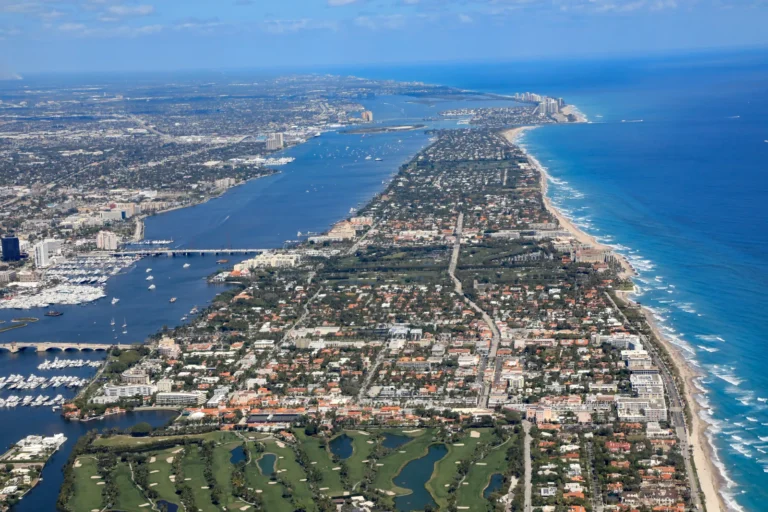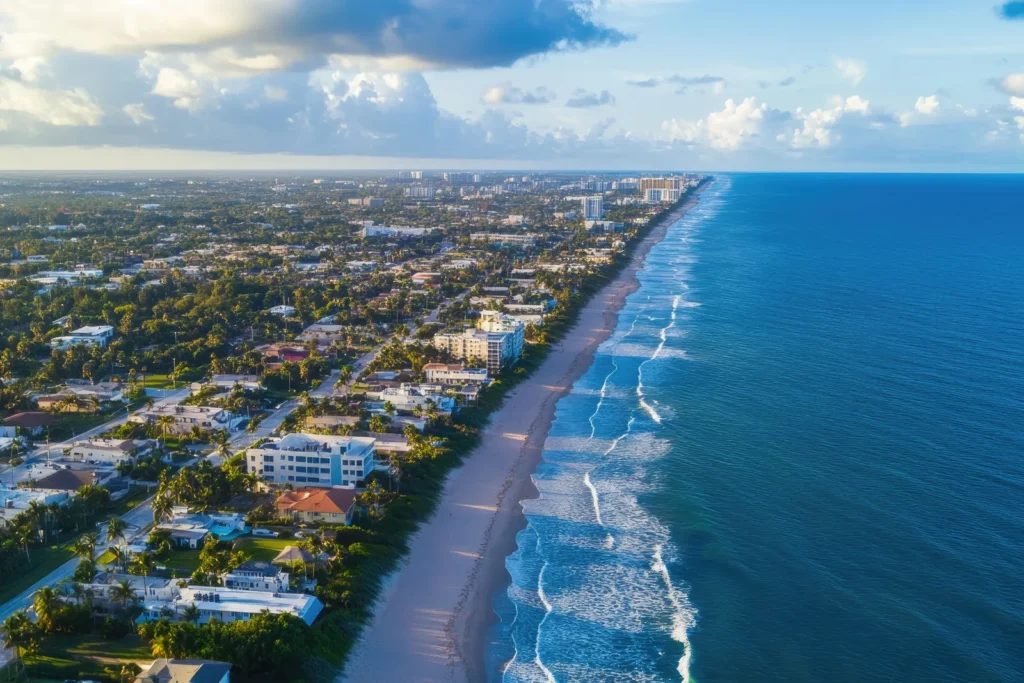
Palm Springs is a village in central Palm Beach County, Florida, chartered in 1957, where a home purchase is shaped mainly by housing type (single-family or condominium), village and county property taxes, and flood-zone and permit checks.
This guide covers how the village is set up, what its housing looks like, how property taxes work, what to check for flood and hurricane risk, how permits and rentals are handled, and how to look up assigned schools. Rules and figures are linked to the official sources they come from.
What is the Village of Palm Springs, Florida?
The Village of Palm Springs is a municipality in Palm Beach County that began as about 700 acres of pastureland and was chartered by the 1957 Florida Legislature. According to the village’s own About Palm Springs history page, the first section opened in August 1958, Palm Springs Elementary opened in September 1959, and Village Hall was dedicated in February 1960.
The same page describes the village as primarily residential and traces its extent along Congress Avenue, Lake Worth Road, Military Trail, Forest Hill Boulevard, Florida Mango Road and 10th Avenue North. It says the Congress Avenue and Lake Worth Road corridors anchor both residential neighborhoods and a growing commercial base, calls the village’s Community Redevelopment Agency (CRA) a key engine of growth, and dates the village’s growth efforts to the late 1990s.
| Key fact | What the official source says |
|---|---|
| County | Palm Beach County |
| Chartered | 1957 Florida Legislative Session; first section opened August 1958 |
| Population | “About 28,000 residents” per the village’s own history page |
| Housing mix (1997) | Two-thirds of residents lived in single-family homes; the rest lived in condominiums, townhomes and apartments |
| School district | The School District of Palm Beach County |
| Electric service | Florida Power & Light or Lake Worth Beach Electric, depending on the address |
What kinds of homes are in Palm Springs?
Palm Springs has a mix of single-family homes and multifamily housing. The village’s history page says that in 1997 two-thirds of residents lived in single-family homes and the remainder in condominiums, townhomes and apartments. The village’s first section opened in 1958, so ask every seller for the year built and the age of the roof, windows and electrical panel, and have those items checked during inspection.
When LPE Realty reviews a Palm Springs purchase, the first question we ask is which housing type the buyer is actually buying, because the documents and costs differ:
- Single-family home: check the survey, flood zone, roof age and any open permits.
- Condominium or townhome: read the association’s budget, reserves and any milestone inspection or structural reserve paperwork. Our condo buying guide walks through the full list.
- Investment or rental purchase: confirm the village’s rental rules before closing (covered below).
Florida’s milestone inspection law, section 553.899 of the Florida Statutes, applies to residential condominium and cooperative buildings three or more habitable stories tall. The first inspection is due by December 31 of the year the building reaches 30 years of age, measured from the certificate of occupancy, with repeat inspections every 10 years (a local agency may set 25 years). The village posts its own Milestone Inspection Report form on its permit forms page. See our milestone inspection guide.
How are property taxes calculated in Palm Springs?
A Palm Springs property tax bill is the property’s taxable value multiplied by the combined millage of every taxing authority that covers the address, and the village is one of several. The Palm Beach County Property Appraiser explains that you multiply the value of a property by the tax rate, called a millage, to get the ad valorem tax bill. Florida law, section 200.001, states rates in dollars and cents per thousand dollars of assessed property value.
The Property Appraiser’s tax rates page lists the village’s rates:
| Village of Palm Springs rate | 2025 final | 2026 proposed |
|---|---|---|
| Operating millage | 3.5000 | 3.5000 |
| Debt service millage | 0.1922 | 0.1746 |
These are only the village’s portions. County, school district and special district rates are added on the same bill, and the 2026 figures are proposals until adopted. Use the Property Appraiser’s parcel search and tax calculator for a specific address instead of estimating from one line of this table.
Two county rules matter to buyers. First, the homestead exemption requires that you hold title as of January 1 and apply by March 1 of the year the benefit applies. Second, the assessment caps limit yearly increases in assessed value (3% or the change in the Consumer Price Index, whichever is lower, for homestead property; 10% for non-homestead property, except for school board taxes), but after a sale the property is reassessed at full market value in the following year. When LPE Realty walks a buyer through a Palm Springs closing, we explain that the seller’s current tax bill is not a prediction of the buyer’s.
What flood and hurricane rules affect a Palm Springs home purchase?
Palm Springs can flood from heavy rain and overflowing canals even when a storm does not make landfall, so checking the flood zone is part of every purchase. The village’s hurricane preparedness page links the Palm Beach County Flood Zone Map and FEMA’s online flood map portal, and notes that homeowners policies typically do not cover flood damage.
The same page states that most of the village is not in an official hurricane evacuation zone, but that residents may be in Evacuation Zone A if they live in a manufactured home, a home of substandard construction, or a flood-prone area. Evacuation orders come through the village’s emergency alerts, local TV and radio, and Palm Beach County Emergency Management.
Florida’s flood disclosure law, section 689.302, requires a seller of residential property to give the buyer a flood disclosure at or before the time the sales contract is executed. It asks whether the seller knows of flooding that damaged the property, whether a flood insurance claim was filed, and whether flood-damage assistance was received, including from FEMA.
- Look up the parcel on the county flood zone map and the FEMA map service before making an offer.
- Ask for an elevation certificate if one exists. The village’s forms page points applicants to FEMA.gov for the Elevation Certificate form.
- Get a flood insurance quote alongside the homeowners quote. See our home insurance guide and windstorm and flood due diligence guide.
How do permits, rentals and renovations work in Palm Springs?
Permits in Palm Springs go through the village’s Planning, Zoning & Building Department, which issues building permits, land alteration and tree removal permits, right-of-way permits and business tax receipts. Its department page lists these responsibilities and says the office is open to the public on weekdays from 8 a.m. to 3 p.m. and accepts no new submittals after 2 p.m.
The village’s forms and applications page shows what a renovation involves in practice. It states that all building permit applications must be notarized by both the owner and the contractor, and it provides separate reroofing installation summary forms by roof type (asphalt shingle or wood shake, concrete or clay tile, metal and flat), a roof inspection policy, and an easement hold harmless agreement for work such as pavers, concrete, fences and driveways in easements. Ask the seller for permit history and final inspections on any recent work.
The same department administers a foreclosure registration program and a property improvement grant program. For investors, the village requires a Residential Rental Certificate of Use and Occupancy application, and its application form states that a local business license is contingent on approval of that certificate and that Palm Beach County tourist development bed tax may be required if a dwelling is rented short term. Confirm the rental rules with the village before you close on a property you plan to lease.
How do I find assigned schools for a Palm Springs address?
Palm Springs is served by the School District of Palm Beach County, and the district’s own tool is the way to find the schools assigned to a specific address. Use the district website, which links a Find My School tool and school boundary maps. Boundaries can change, so run the address through the tool before you write an offer.
What parks, transit and airport access does Palm Springs have?
The village lists several parks in its facility directory, including Frost Lake Park, which has a fishing pier and an exercise station, Christmas Palm Park, Foxtail Palm Park, Greenbrier Park and the village ball fields. The village’s history page says its core campus expanded to include a water park, another playground and a covered pavilion.
For transit, Palm Tran lists 29 fixed bus routes across Palm Beach County and has a trip planner for checking a specific address. Tri-Rail serves Miami-Dade, Broward and Palm Beach counties and lists a Lake Worth Beach station. For flights, the county’s Department of Airports operates the airport in West Palm Beach.
Frequently asked questions
Is Palm Springs, Florida the same as Palm Springs, California?
No. This guide covers the Village of Palm Springs in Palm Beach County, Florida, chartered by the 1957 Florida Legislature.
Is Palm Springs, Florida a city or a village?
It is a village. The municipality is named the Village of Palm Springs, and its own history page refers to a Village Council.
How do I check the flood zone for a Palm Springs home?
Enter the address in the Palm Beach County Flood Zone Map and FEMA’s online flood map portal, both linked from the village’s hurricane preparedness page, and ask the seller for any elevation certificate.
Where do I get a building permit in Palm Springs?
Through the village’s Planning, Zoning and Building Department. Building permit applications must be notarized by both the owner and the contractor, and the department does not accept new submittals after 2 p.m.
When is the Palm Beach County homestead exemption deadline?
You must hold title and be eligible as of January 1, and apply by March 1 of the year the exemption applies, according to the Palm Beach County Property Appraiser.
Who collects trash in Palm Springs?
The village contracts with Waste Pro for solid waste collection, with garbage collected twice per week and recycling once per week.
Ready to talk through a Palm Springs purchase or sale? Start with buy with LPE Realty or sell with LPE Realty. LPE Realty LLC is a licensed Florida real estate brokerage.