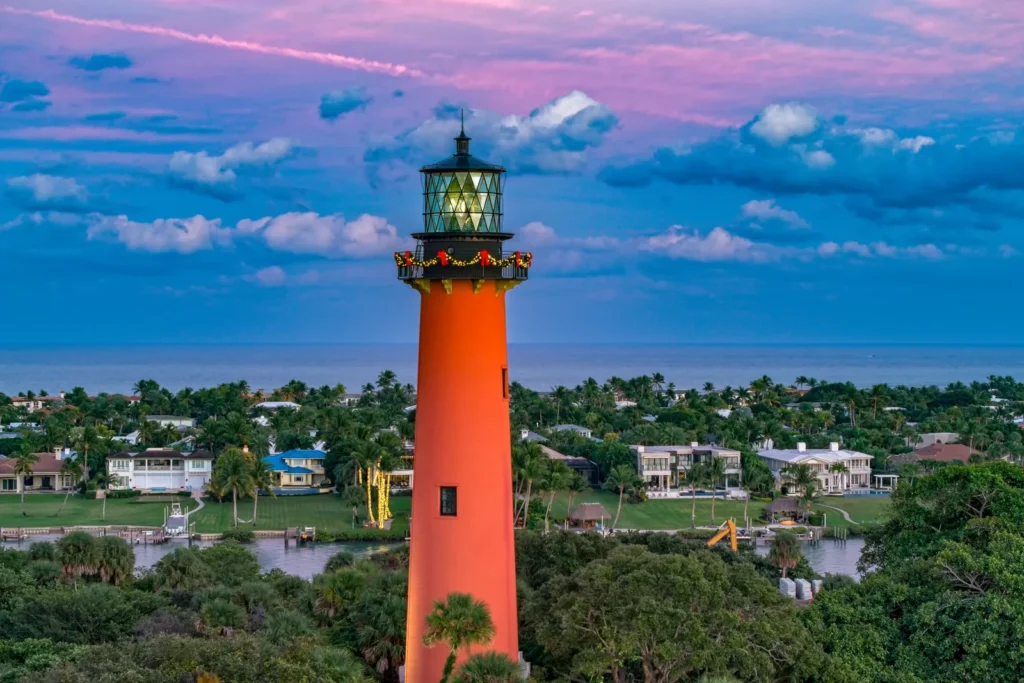
St. Lucie Village is a small, mostly residential town on the Indian River Lagoon in St. Lucie County, and three things shape a purchase there: septic and well water, flood exposure east of the railroad, and a town-run permit and dock process.
This guide covers location, zoning, utilities, flood and evacuation lookups, docks, taxes and schools, with each rule linked to the town, state or federal source that publishes it.
Where is St. Lucie Village and how big is it?
St. Lucie Village is an incorporated town about 2.6 miles long, running north to south between U.S. Highway 1 and the Indian River Lagoon, according to the Town of St. Lucie Village website. The town’s site says that length is bisected by the Florida East Coast Railway and Old Dixie Highway (State Road 605). The town was formed in 1961 by incorporation at a public meeting, per its charter page.
| Key fact | What the source says |
|---|---|
| County | St. Lucie County |
| Incorporated | 1961 |
| Population | Approximately 600 (town website) |
| Area | About 464 acres (2006 county GIS data, cited in the 2011 town plan) |
| School district | St. Lucie Public Schools |
What zoning applies to homes in St. Lucie Village?
The predominant land use is single-family residential, and the town’s Land Development Code sets six districts: R-1 and R-2 residential, C commercial, MC marine commercial, RPF recreation and public facilities, and CSV conservation. In R-1 the code allows two dwelling units per gross acre on lots of at least 21,780 square feet (one-half acre), with 30 percent maximum building coverage and a 35-foot height limit. R-2 allows four units per acre on lots of at least 10,890 square feet. Both come from the Land Development Code, which is posted on the zoning and land use page.
Commercial zoning generally runs along U.S. Highway 1, with no access through residential districts. The code is a codification through Ordinance 2023-1, and the ordinance index lists later ordinances, so confirm the current rule for any parcel.
Do St. Lucie Village homes use septic systems and wells?
Yes, according to the town’s 2011 comprehensive plan update, which says no central sanitary sewer serves the town and that residents and businesses rely on septic systems and on-site wells. That is the plan’s description as of its writing, so ask the town and the seller what serves a specific address today.
When LPE Realty reviews a St. Lucie Village purchase, the first question we ask is how the property handles wastewater and drinking water, because it drives inspections and what you can add later. Under Florida Statute 381.0065, a septic permit transfers with title, and a government may not mandate a septic inspection at the point of sale. A buyer can still order a private inspection during due diligence.
What do flood zones and evacuation zones mean for a purchase here?
The town’s plan says much of the land east of the railroad lies in the Coastal High Hazard Area, the area most threatened by storm surge and flooding from a Category 1 or greater hurricane. The Land Development Code ties the minimum first-floor elevation of residential buildings to the town’s Floodplain Management Ordinance, Ordinance 2016-1.
Look up an address in the FEMA Flood Map Service Center to find its official flood map. FEMA’s FloodSmart site says owners in high-risk flood areas may be required to carry flood insurance, so ask your lender early. LPE Realty tells buyers here to pull the flood map and the evacuation zone before making an offer. The state’s Know Your Zone page says zones run from A to F and lets you type in an address.
Can I build a dock or rent a home short term in St. Lucie Village?
Docks are tightly regulated. Section 3.8.0 of the Land Development Code requires 75 feet of frontage on the Indian River (50 feet for certain established residences), a 25-foot setback on each side of a new dock (20 feet for those established residences with 50 to 75 feet of frontage), and prior approval of the Board of Aldermen plus state and federal permits. Residential docks are allowed only as accessory uses, construction cannot begin before the home’s certificate of occupancy is issued, dock spaces cannot be rented, and no dock may moor a boat people are living on.
The town’s ordinance index also lists a Vacation Rentals Regulations ordinance and an annual renewal fee for vacation rentals. Read both before planning a rental.
What does the historic district mean for buyers?
The oldest part of the town is a National Register historic district with 33 contributing homes and structures, and the town’s site says the oldest home was built in 1875. National Register status and local regulation are different things: the 2011 plan said the district was not locally regulated then, and the ordinance index shows no historic preservation ordinance. Ask the town what applies to a specific house.
How do property taxes, homestead and schools work?
The town adopts its budget by resolution each fiscal year, which begins October 1, posted on its budget page. Your bill also includes county and school levies, so ask the St. Lucie County Property Appraiser for the parcel’s full rate breakdown.
Homestead requires title on January 1 and permanent residence under section 196.031, with the application due to the county property appraiser by March 1 under section 196.011. After that, section 193.155 caps yearly assessment increases at the lower of 3 percent or inflation and resets the assessment after a change of ownership. For schools, the district’s student assignment page lists kindergarten through middle school zones and links a high school interactive map; the office’s staff can confirm the zone for an address.
Who governs the town and handles permits?
The officials page describes an elected mayor and five elected aldermen. The meetings page says the Board of Aldermen meets monthly on the third Tuesday at 6:30 p.m. Permit forms are on the building and permit forms page, so pull permit history before planning renovations.
Frequently asked questions
Is St. Lucie Village part of Fort Pierce?
No. It is a separate town formed in 1961, though Town Hall’s street address uses Ft. Pierce, FL 34946.
Who approves a new dock?
The Board of Aldermen must approve it before a permit is issued, and the applicant also needs state and federal permits.
When is the homestead deadline?
Applications go to the county property appraiser on or before March 1.
How do I find the assigned school for an address?
Check the zone lists and the high school interactive map on the St. Lucie Public Schools student assignment page.
Does a buyer have to get a septic inspection?
A government may not mandate one at the point of sale, but a buyer can order a private inspection.
LPE Realty LLC is a licensed Florida real estate brokerage. If you are ready to buy with LPE Realty or sell with LPE Realty, we begin with the parcel’s utilities, flood data and permit history.